 Monographie
Ce document apparaît dans la/les liste(s) :
BEYROUTH-Acquisitions-2023-trimestre 3
|
BEYROUTH-Acquisitions-2023
Monographie
Ce document apparaît dans la/les liste(s) :
BEYROUTH-Acquisitions-2023-trimestre 3
|
BEYROUTH-Acquisitions-2023
| Site actuel | Collection | Cote | Statut | Code à barres | |
|---|---|---|---|---|---|
| Bibliothèque Beyrouth Magasin | Achat | BEY-4°-5434 | Disponible | 1039523 |
Bibliographie pages [152]-172. Notes bibliographiques en bas de page. Index
Texte remanié de Thèse de doctorat Archéologie Université d'Aarhus (Danemark) 2019
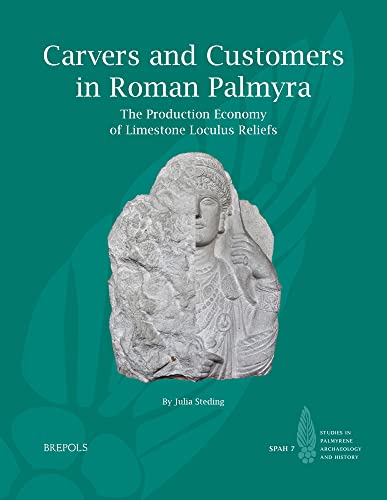
Palmyra, located in the Syrian desert, is famous for the portraiture of its citizens, produced when the ancient city was at the height of its powers in the Roman era. At this time, several hundred funerary monuments were built and the Palmyrenes decorated their tombs with numerous portraits. The most common of these are the loculus reliefs that depicted Palmyra?s men, women, and children, and were used to close off the niches in tombs behind which the dead were buried. Between AD 50 and AD 273, these stone slabs were produced in sufficient numbers to make Palmyra home to the largest corpus of funerary portraits outside Rome itself.00This volume offers a fresh and nuanced analysis of Palmyrene funerary reliefs and their production in order to shed light not just on the people they depicted, but on the individuals responsible for their creation. Across a range of different case studies, the author explores the making of single portraits from the local limestone, examining how Palmyrene carvers worked, the techniques they used, the tools they employed, the ways in which style and technique changed over time, and the mode of production that was in place. Furthermore, the workshops? organization, the interaction between carvers and customers, and their influence on the portraits are explored. In doing so, the volume offers not just a detailed study of limestone carving and the techniques that underpinned Palmyra?s famous portraits, but also offers a significant contribution to wider research on funerary portraiture of the city and in Roman Syria 4e de couverture